
August 13, 2026
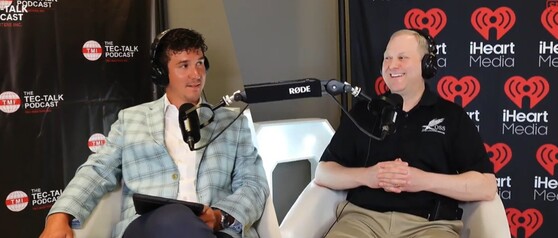
That was at the center of a recent conversation between Tec-Talk Podcast host Luke Dorminey and OSS Chief Technology Officer Lloyd Sanders at the Space and Missile Defense Symposium in Huntsville.
From automation and artificial intelligence to autonomous systems, Golden Dome, fielding, and cybersecurity, the conversation covered a lot of ground. But one message remained consistent: Technology only creates an advantage when it can be trusted, integrated, and put into the hands of the people who need it.
When asked to describe OSS in one word, Lloyd's answer was simple: automation.
Whether helping government organizations streamline complex processes or developing technology for use in operational environments, OSS focuses on helping customers move faster and work more efficiently. That includes helping address one of the biggest challenges facing emerging technologies: getting from development to deployment.
Lloyd discussed the "Valley of Death," where promising technologies can reach a certain level of maturity but struggle to secure the funding and support needed to move forward. The goal is to help shorten that transition and accelerate the path from innovation to operational capability.
Artificial intelligence was another major topic of the conversation. For Lloyd, AI cannot be a black box, especially when it supports decisions involving security, safety, or human lives.
Operators need to understand what a capability can do, why it works, and just as importantly, where its limitations are. That is the foundation of what Lloyd describes as high-trust AI.
OSS is also focused on bringing AI capabilities to the edge. In real-world operations, warfighters cannot always depend on cloud connectivity or access to large data centers. Sometimes, they only have what they can carry with them. That means developing AI that is purpose-built, efficient, and capable of operating with limited computing power, battery life, and connectivity.
Lloyd also discussed the growing importance of autonomy and robotic warfare. From the beginning, OSS has focused on technologies that could create the next strategic advantage. Today, that includes autonomy, advanced algorithms, AI, and emerging technologies such as quantum computing.
The discussion also turned to the challenges of defending a country as large as the United States. Future defense will require layers of interconnected capabilities, from localized protection of critical infrastructure to broader national defense systems. But making those systems work together presents a major challenge. For decades, systems have often been developed independently. The future will require greater integration, interoperability, and the ability for sensors, systems, and decision tools to communicate across an open architecture.
Of course, developing great technology is only part of the equation. It still has to get to the warfighter. Through its fielding and training capabilities, OSS helps support the transition from technology development to operational use. That can include equipment fielding, training development, logistics, sustainment, and helping customers navigate the complex requirements of delivering technology around the world.
As Lloyd pointed out, a company may develop an incredible piece of technology, but if the end user does not know how to operate and maintain it, that technology will never reach its full potential. That is why OSS focuses on supporting customers throughout the lifecycle, from research and development to integration, fielding, operations, and sustainment.
Throughout the conversation, Lloyd kept coming back to one simple idea: OSS wants to get trusted, effective capability into the hands of the people who need it. For OSS, that means combining automation, high-trust AI, autonomy, integration, training, and operational experience to help customers move technology from concept to capability. Because in the end, technology does not create an advantage sitting in a lab. It creates an advantage when it reaches the field.
Live at SMD Symposium 2026: Lloyd Sanders — Chief Technology Officer, OSS - YouTube
https://www.youtube.com/watch?v=LXkbJ5xH6k0
Video Production and credit to: TEC-Masters’ TEC-TALK (Luke Dorminey) and iHeartMedia (Brandon Abney and Derrick Chasteen)
LINK to CAREERS page: https://www.theossteam.com/careers/